What makes a good street diptych? Here’s some inspo for your visual stories.
From exhibitions to photobooks to family photos on a desk, the power of a collection of photos is that it tells a story that a single photo cannot on its own.
Diptychs — that is, a set of two photos framed together as a pair — are on my mind. I’m currently a co-curator for Ephemere Tokyo’s “Duality” open call for a forthcoming photobook and related online exhibition for diptychs. In reviewing submissions and working my own photos, I’m thinking a lot about the characteristics of what makes an interesting two-photo story.
What makes a good diptych?
All art that pleases its creator is successful, in my view. Someone doesn’t like my work? That’s ok — it’s not for them.
As a baseline, a diptych should be visually coherent and harmonious — the two images should look like they are aesthetically “cut from the same cloth” or of the same world.
Beyond this, I think a great diptych:
Immediately asks the viewer a question. The set should invite viewer to create a story in their mind: What is the connection? What happened in-between?
Mutually elevates and reinvents each photo. Presentation as a set recontextualizes and elevates the individual composition of each photo.
Provokes with the unexpected. I love a diptych that stops me in my tracks with an unexpected juxtaposition of photos — e.g. unusual pairings of subject matter that force the eye to solve a puzzle.
I find it inspiring to think about the diptych format as a lens to see photos I’ve taken in the past with new eyes — and as a creative prompt of sorts when I’m out and about with my camera. In that spirit, here’s a starter set of concepts to go about creating your own street photo diptychs.
1. The Metaphor
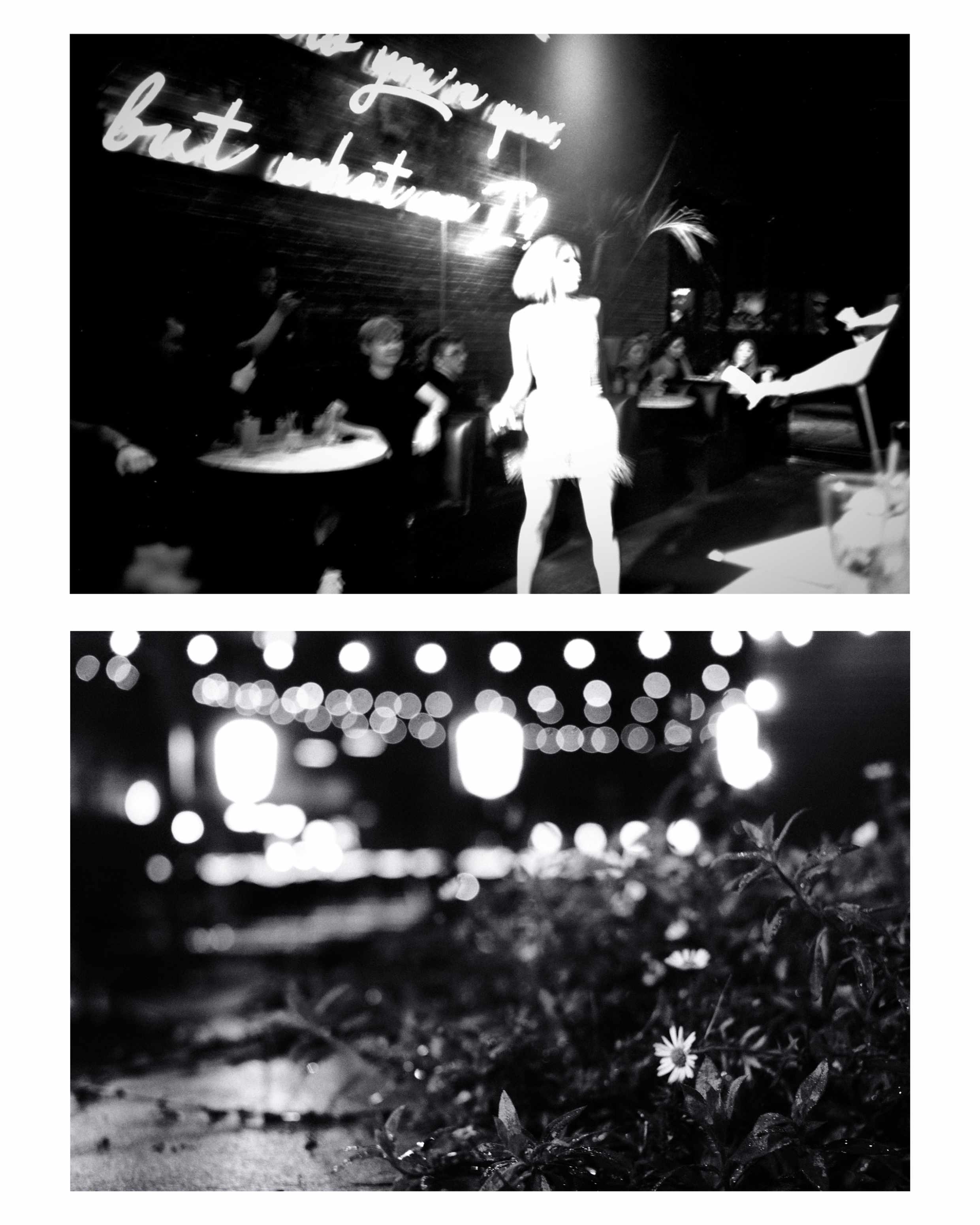
Diptychs force a direct comparison (or metaphor) when there are similar visual patterns. The human mind makes sense of the world through pattern recognition.
When you create a parallel, the viewer’s eye tries to resolve it. What are you comparing? Are you highlighting their similarities or differences? Is there a deeper meaning or commentary?
Here’s an example above from my own work. I actually took both of these photos on the same rainy night in early March 2020, right before the global lockdowns. I call it “Last Dance” or “Flower.” The first photo is of a brightly-lit drag queen dancing in a dark club amid supportive fans and glowing neon. The second photo is a fresh white spring flower bursting through the city concrete amid evening lights. (I could have edited the flower to be whiter/higher contrast, but I generally don’t edit much.)
To my eye, the dancer and flower felt the same — bright lifeforces against urban backdrops, thriving and vital against many odds. They felt especially poignant to me in retrospect, knowing what happened in the world right after I took these.
2. Big World, Small Human
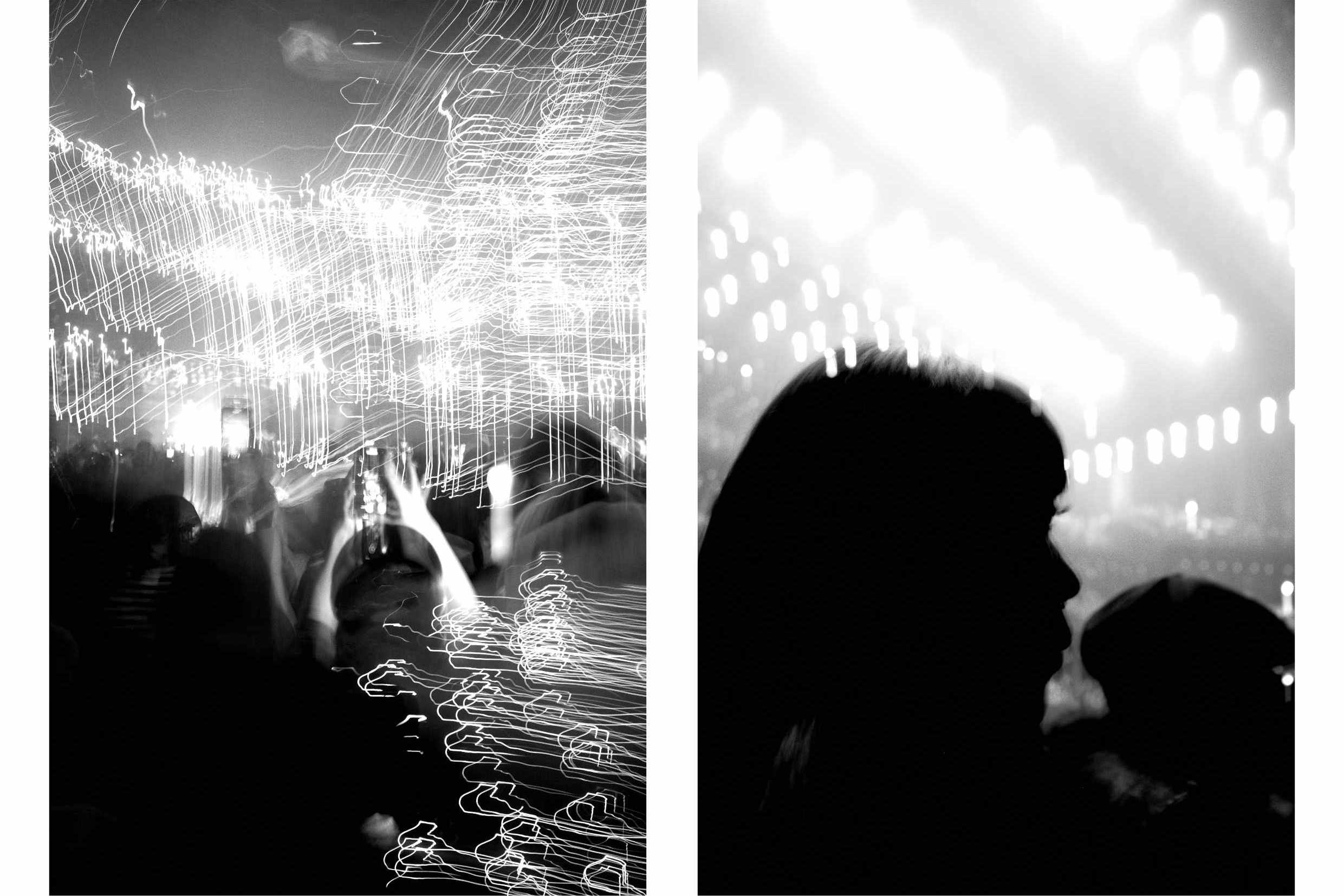
Zoom in, zoom out. This is about showing the individual in a broader context of their world, the person at human scale in a mass of humanity. A large crowd in a city can feel abstract, but we are wired to empathize with person next to us.
The example here is a concert and a concertgoer in the crowd. I took these at a Måneskin concert in Tokyo in December 2023. This type of diptych can help the viewer understand the scale of a place or event, or put the viewer in the situation themselves.
Have you heard the saying that “every picture is a self-portrait”? Above, you are seeing the silhouette of a woman at a concert — but you are also necessarily seeing my view, as a fellow small woman submerged in a sea of people, looking up and out over heads under a starry canopy of lights.
3. Inside/Out
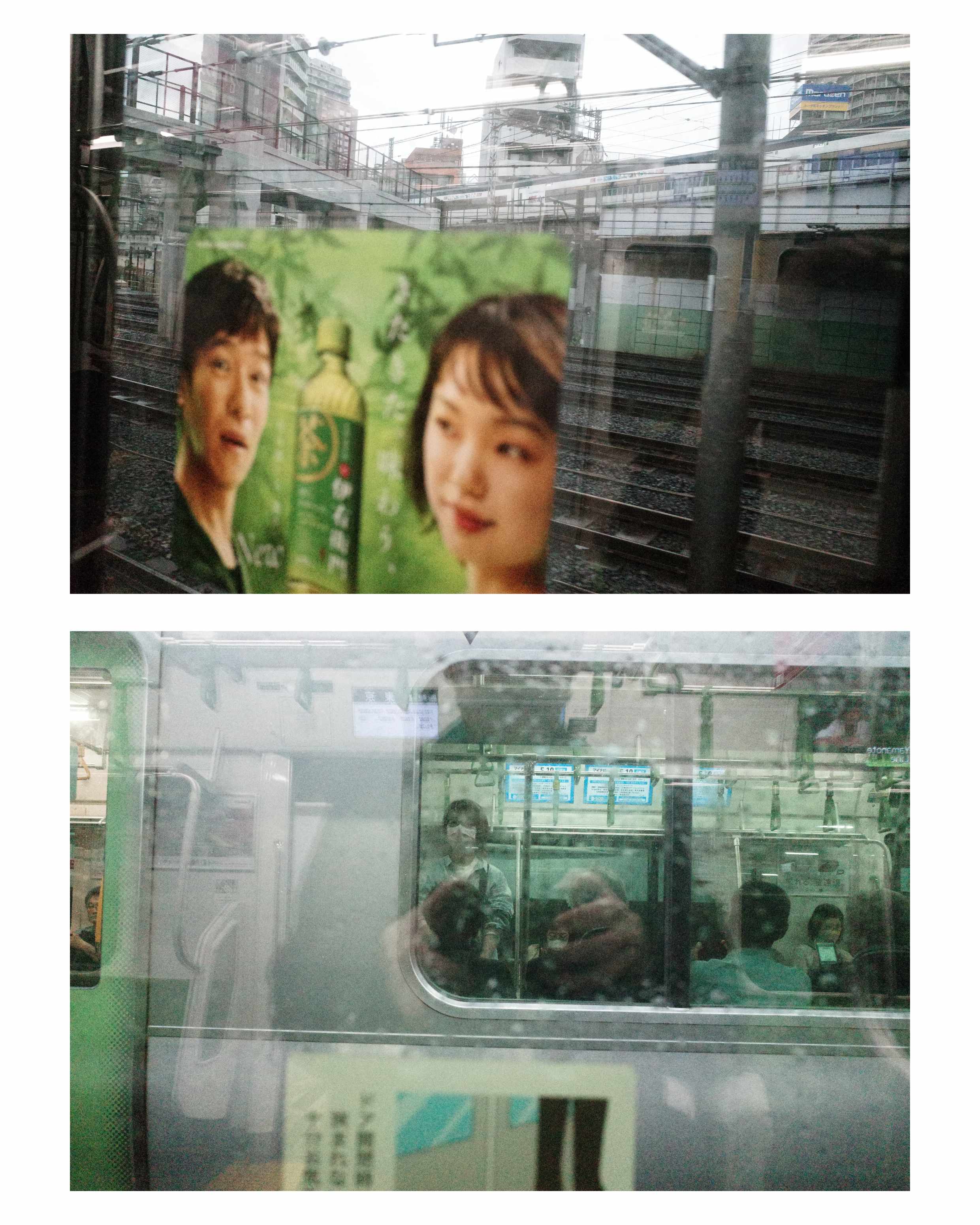
“Inside/out” diptychs show us both a subject and what they see — the beholder and what’s in the eye of the beholder.
In this simple example from my Yamanote Rain photo essay, you see an exterior view of people riding in a train plus an interior view of what its like to be inside that train looking out at a wet city. In the second photo, you can also see my reflection in the glass and a woman looking back at me, which explictly makes it a direct point-of-view narrative. The dual gaze of the advertisement in the first photo underscores the theme.
There are many ways to work with this type of diptych to tell a visual story — of an outsider looking in, of voyeurism, or of different points of view on the same scene.
What do you think makes a good street photo diptych?
The more I think about diptychs, the more I’m inspired to compose them. (I currently can’t stop doing it… :)) It’s a wonderful challenge that can help you build new creative muscles and find new ways of working with your photography.
How do think about making street photography diptychs? I’d love to see yours or know what you think!


Leave a Reply