The one where I interview myself.
I keep on meeting photographers in Zürich who have, like, day jobs at CERN.
Artists have forever and usually, unless independently wealthy, had other professions or means of making money beyond their art.
Here are just a few people I know: Sculptor/Physicist, Dancer/Teacher, Painter/ Executive Assistant, Musician/Manager, Comedian/Designer. Several Architect/Photographers. Here’s an interview I did recently with a Poet/Librarian.
I’m fascinated by these intersections of self — as it is, after all, one person at the core. What are the unique combinations of skills or sensibilities that are unexpected or surprising to an outsider?
I intend to make The Secret Lives of Photographers interviews a series. 10 questions, 10 answers. I will start with yours truly, which is as good of an introduction as any. Hello!
INTERVIEWER: I’m meeting you for the first time at a party. I ask you: “What do you do?”
JILL: I’m a photographer and designer. Until last year, I would have responded that I am a designer in tech (industry).
INTERVIEWER: What’s your main gainful employment, i.e. “day job,” profession, career?
JILL: For the past 20 years, I’ve worked in the tech industry — mostly as a product and user experience (UX) designer, but also as a front-end developer, writer, and sound designer. Websites, mobile apps, physical stores, and voice assistants. Most recently, I worked on Amazon Alexa (AI) for multilingual and international use cases.
INTERVIEWER: Why or how did this come to be?
JILL: I wanted to grow up to work in book publishing in New York City, then Web 1.0 happened in the mid-late 90s and I got obsessed with web publishing and the magic and power of global reach. It was so exciting. I taught myself HTML, got a job in San Francisco as a web developer, and never looked back.
INTERVIEWER: What do you like about it?
JILL: I love inventing and making things — of which there is infinite supply when working with new technology. I am happiest when I am learning and creating new things that haven’t existed before.
INTERVIEWER: Who are you as a creative? What is your art or mode of expression?
JILL: I am a lifelong writer and photographer, in ways that are ever-evolving. I also play with ambient electronic music, ink, paint, and immersive digital art.
INTERVIEWER: Why photography?
JILL: I’m extremely visual and have always mentally composed scenes as I walk through life. Like, I see in frames. This is both a blessing and a curse – I can’t turn it off. Being able to physically capture and share these scenes closes a mental loop for me in a sense, which deeply satisfies that impulse. And I’m a bit of an archivist at heart — I like to collect samples of the world. I also record sounds.
INTERVIEWER: How did you start? How long have you been doing it?
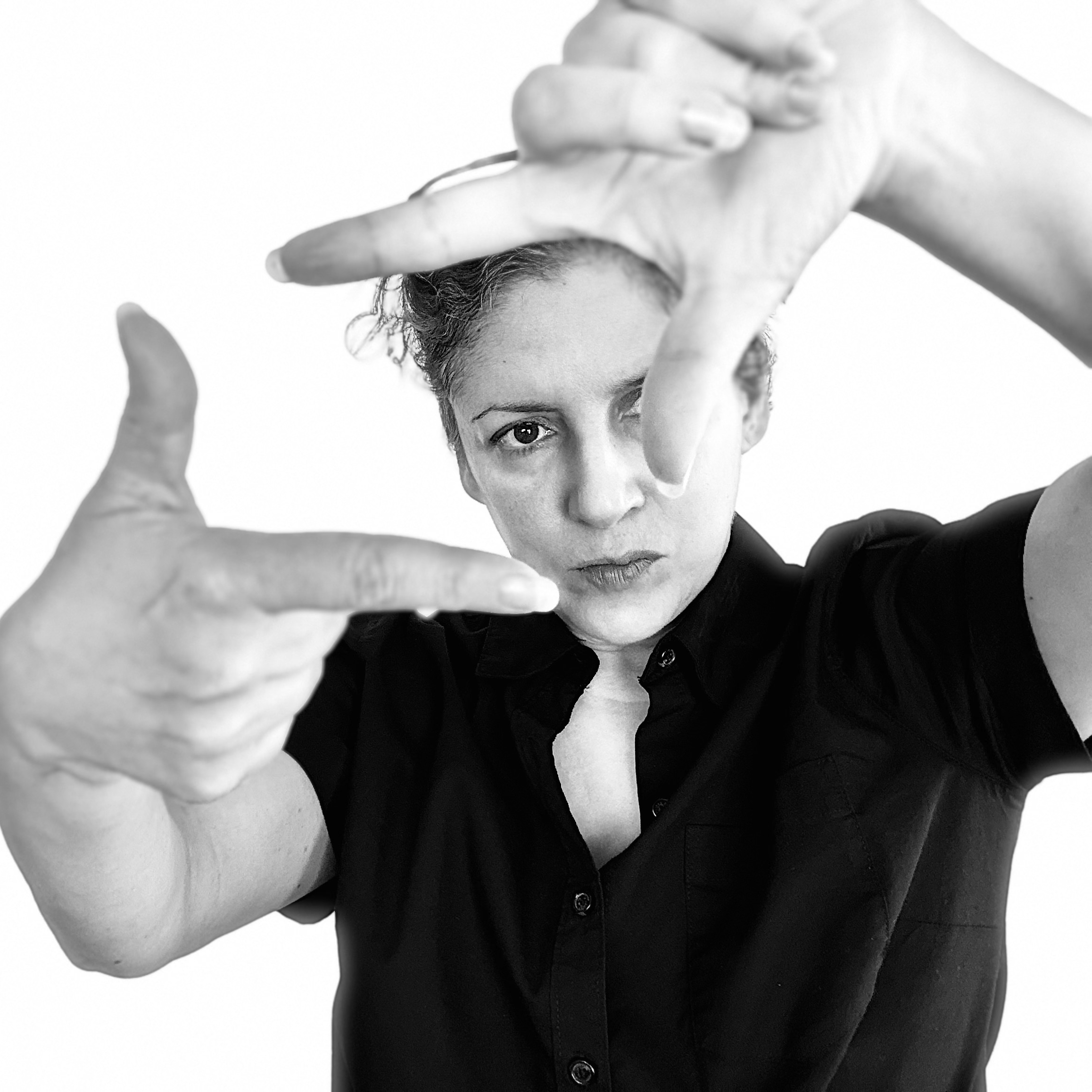
JILL: I found my first camera in a hallway closet when I was about 6 — a giant Kodak Polaroid Land Camera from the 60s that folded out like an accordion and made instant black & white prints. What a beast! I could barely lift it. I’ve always had a camera since then — I was always the photographer at parties, did street photography when I was 11 (!), and learned how to develop film in high school. I started calling myself a photographer and connecting with photography communities in 2016, and currently am more active than ever.
INTERVIEWER: How much time or energy do/can you usually devote to it?
JILL: Right now it’s my main work, but even when I was working beyond full-time in the corporate world, I took it very seriously and would work at it almost daily. Over the years, I also dedicated a few unpaid breaks here and there to professional photography education and exploration.
INTERVIEWER: What are you working on or excited about right now?
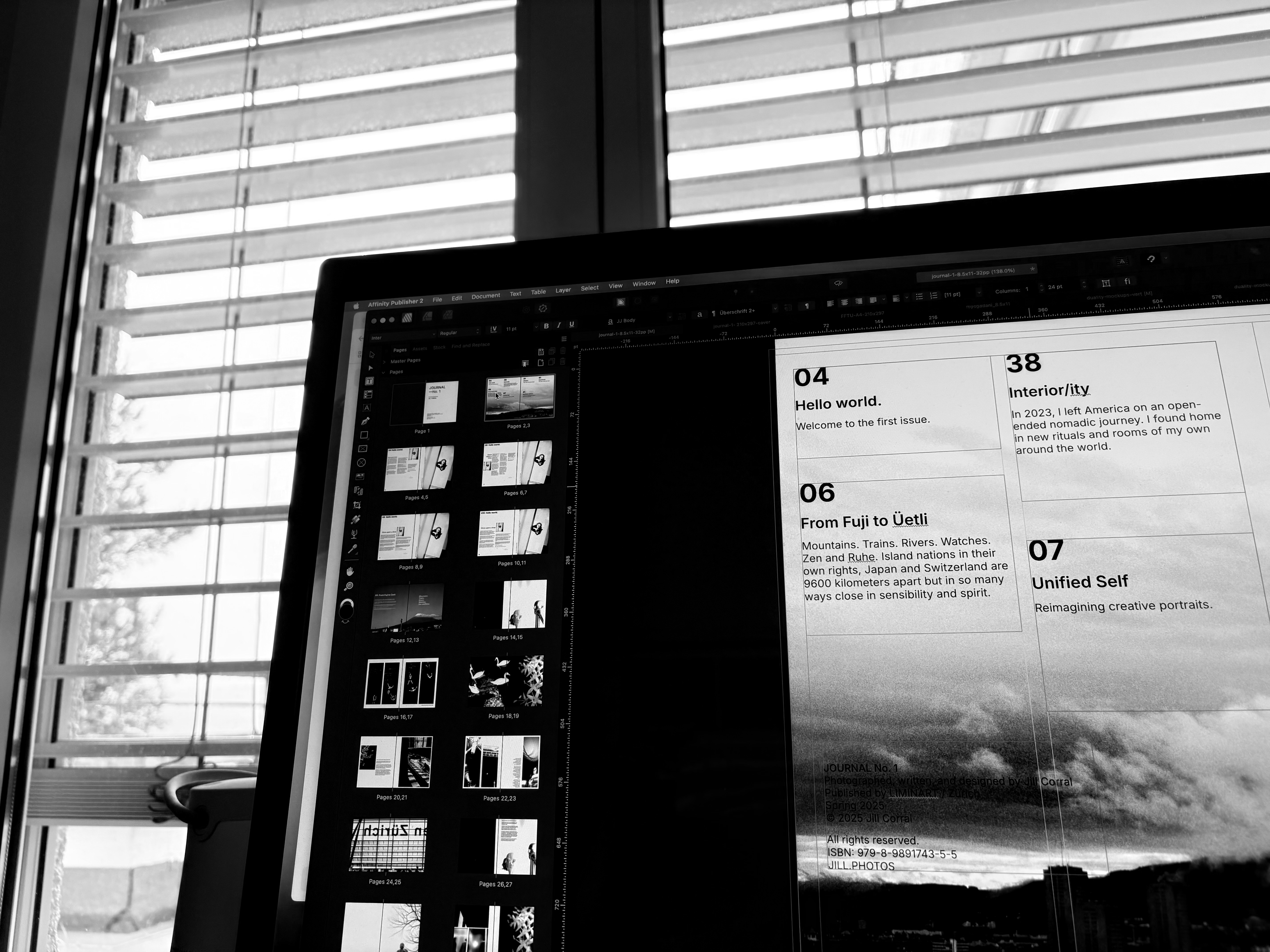
JILL: My new photography magazine JOURNAL — the first issue will come out this summer. It’s where I will bring together my writing, visual work, and inspiration in a fully-expressed way on a regular basis, likely twice a year. I am inspired by Swiss design/art magazines, as well as artist Daido Moriyama’s self-published Record series, and just generally… I’ve always loved making photobooks and zines.
I’m growing tired of everything being in an electronic cloud outside my control; I want the physical thing — to truly own it, to share it, to feel it in my hands.
I founded my own imprint Liminocity a few years ago and have published some non-fiction work under it. I’ve now created a new one under it (LIMINART.) for art books only – starting with my own, but hoping to grow this to help more artists get their work out there in print in the near future.
INTERVIEWER: What’s the intersection of your profession and creative work? What might surprise people?
JILL: Art and design are siblings… and they are opposites.
Art is open-ended expression. Design is a puzzle or problem to solve against requirements. Art is freeing… and overwhelmingly vast. Design is constrained… and has satisfying endpoints. I think about this a lot.
If you work in either one, you need to develop a thick skin against criticism — people will always have strong opinions about your work, and you need to have a grounded mind to discern constructive critique versus difference of opinion. Working in design in the technology industry in corporate America was intellectually thrilling but also emotionally challenging. One develops mental tools for navigating putting one’s creative work out into the world — this is very useful, empowering, and liberating.
In product design, you are always asking if something works for the customer. In art, the artist themselves is the only “customer” that matters: am I making something I love, am I meeting my own standards? I love when people like my photos, but I don’t care if they don’t. You could stand next to me at my own exhibition and call it rubbish… and that’s okay — it’s not for you.
I am continually discovering ways that my design expertise comes into play in the art world. Here are just a few examples:
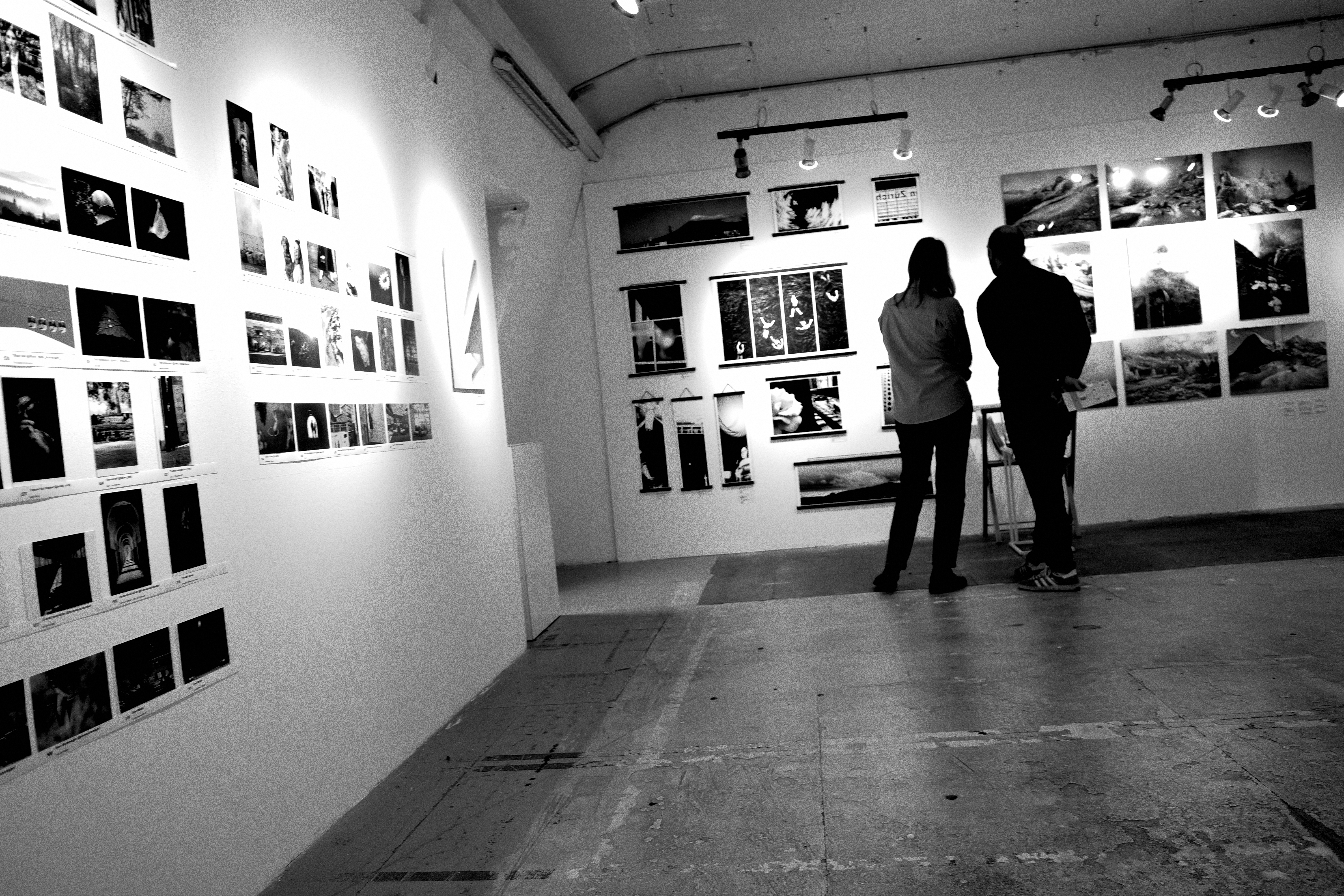
Exhibition / Gallery Curation: From selecting artworks that tell a story to arranging them in a physical space — this is user experience design, period. Workflow, understanding how eyes travel and consume visual information in a layout, wayfinding and navigation. Galleries are user interfaces.
Publishing: Text and visuals working against physical, economic, and aesthetic constraints to be easily consumed and effectively understood by an audience. Layout, typography, navigation. Classic design stuff.
Photography Classes / Workshop / Photowalks: These are all design workshops — from designing the event structure, materials used, content delivered, to dynamically adjusting them to real-life attendees. I have led countless design workshops, user interviews, usability studies, and creative sessions – and am using all those skills now in the photography world.
Art and design are completely different modes of operating to my brain (and spirit!), and this era for me is about choreographing them to dance together.


Leave a Reply